



📚 New Blog Posts
1. How to Achieve FDA Audit Readiness in Process Manufacturing
2. This Month in Process Manufacturing – March 2026
3. Why “95% Inventory Accuracy” Still Fails Process Manufacturers
“Failing to plan is planning to fail.” – Benjamin Franklin
As familiar as this statement may be, its relevance in process manufacturing remains undeniable.
Process manufacturing organizations invest significant effort in selecting the right ERP system and understanding their internal operations. However, many implementations fall short—not because of the technology, but because the transition from strategy to execution lacks structure.
As part of this ERP Implementation Series, this phase follows ERP selection and internal discovery, where process manufacturers evaluate solutions and gain clarity into their processes.
At this stage in the ERP implementation lifecycle, process manufacturers move from discovery into structured planning—laying the foundation for execution, configuration, and eventual go-live.
This is where project planning and kickoff begin.
From Discovery to Execution: Why This Phase Matters
Internal discovery provides visibility into current operations—highlighting inefficiencies, aligning departments, and defining future-state processes.
But insight alone does not drive transformation.
Process manufacturing organizations must now translate that understanding into a structured execution plan by answering key questions:
- What exactly will be implemented—and in what sequence?
- How will resources, timelines, and budgets be managed?
- Who is responsible for decisions and execution?
- How will teams remain aligned throughout the project?
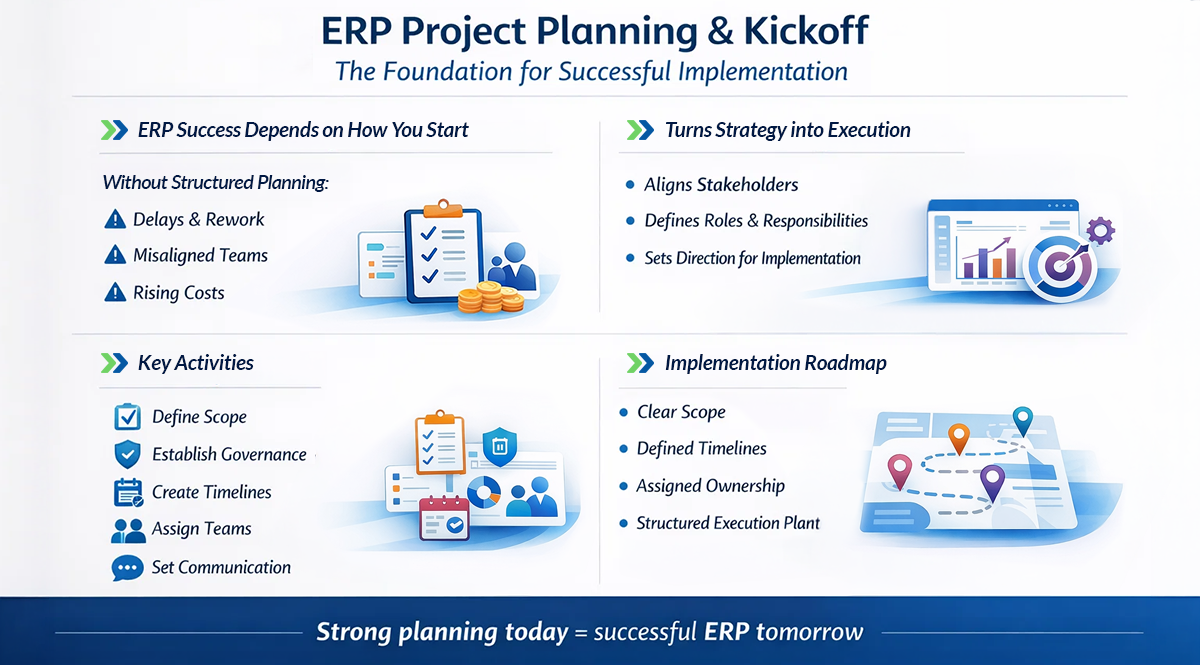
Without clear answers, ERP implementations often encounter delays, rework, and rising costs.
Project planning and kickoff address these challenges by creating a clear, actionable framework for implementation.
What is ERP Project Planning and Kickoff?
Project planning and kickoff mark the official start of the ERP implementation project.
- Kickoff brings stakeholders together to align objectives, roles, and expectations.
- Planning defines how the implementation will be executed—from scope and timelines to governance and communication.
This phase also introduces early gap validation and initial solution alignment, ensuring that business requirements identified during discovery are realistically mapped to system capabilities before execution begins.
Together, these efforts ensure the organization moves forward with clarity, accountability, and control.
Key Activities That Define a Successful Planning and Kickoff Phase
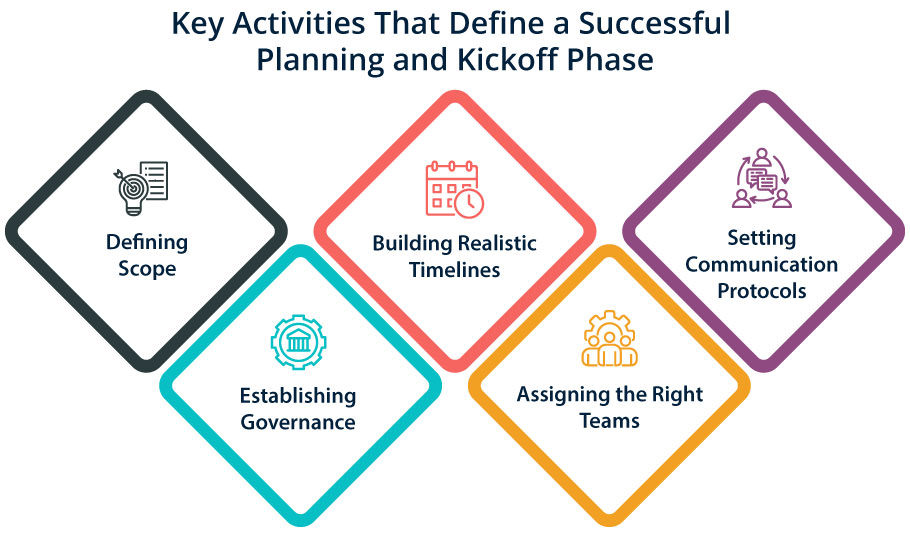
A well-structured kickoff and planning phase includes several critical activities that shape the success of the entire ERP journey.
1. Defining Scope: Setting Clear Boundaries for Success
Defining scope is the first and most important step in planning.
It involves identifying:
- Business processes to be implemented (production, inventory, quality, finance)
- ERP modules and functionalities
- Locations or facilities included in the rollout
- What is intentionally excluded from the current phase
Clear scope prevents scope creep, where additional requirements emerge mid-project, leading to delays and increased costs.
For process manufacturers, this ensures focus on high-impact operations that deliver measurable value early in the implementation.
2. Establishing Governance: Driving Accountability and Decision-Making
ERP implementation requires strong leadership and clear accountability.
Governance defines:
- Who makes strategic decisions
- Who manages day-to-day execution
- How risks and issues are escalated
A structured governance model typically includes:
- An executive sponsor guiding strategic direction
- A project manager overseeing execution
- A steering committee resolving key decisions
- Functional leaders ensuring departmental alignment
Without governance, projects lose direction, decisions are delayed, and accountability becomes unclear.
For manufacturing organizations, governance ensures alignment between operations, quality, and financial objectives.
3. Building Realistic Timelines: Aligning Expectations with Execution
ERP implementation requires a structured timeline with clearly defined phases and milestones.
This includes:
- Planning project phases such as design, configuration, testing, and go-live
- Setting realistic deadlines
- Identifying dependencies across tasks
Overly aggressive timelines often lead to rushed decisions and compromised outcomes.
A well-planned timeline ensures:
- Better coordination across teams
- Early identification of risks
- Minimal disruption to ongoing operations
4. Assigning the Right Teams: Enabling Cross-Functional Collaboration
ERP is not just an IT initiative—it is a business transformation effort.
Successful planning requires assembling the right team, including:
- Internal stakeholders from production, supply chain, quality, finance, and IT
- External implementation experts
- Subject matter experts with deep process knowledge
Involving the right people early ensures:
- Accurate requirement validation
- Faster decision-making
- Stronger system adoption
For process manufacturers, early involvement of quality and compliance teams is critical to ensure regulatory requirements are embedded into the system.
5. Setting Communication Protocols: Ensuring Alignment Throughout the Project
Clear communication is essential for keeping ERP implementation on track.
Planning this upfront includes:
- Defining regular project meetings
- Establishing reporting structures
- Creating escalation paths
- Ensuring transparency across all stakeholders
Poor communication leads to misalignment, delays, and increased risk.
A structured communication framework ensures that leadership and operational teams remain aligned throughout the implementation.
The Output: A Structured Implementation Roadmap
The outcome of this phase is a comprehensive implementation roadmap.
This roadmap serves as the foundation for the entire ERP journey and includes:
- Clearly defined scope
- Detailed timelines and milestones
- Assigned roles and responsibilities
- Governance and communication structures
It becomes the single source of truth that guides execution from planning through go-live.
For manufacturing organizations, this roadmap ensures a controlled, predictable, and efficient transition to the new ERP system.
How Modern ERP Solutions Support Structured Planning
ERP systems designed for process manufacturing play a critical role in enabling structured implementation.
Such systems support organizations by:
- Aligning workflows across production, quality, and supply chain
- Enabling phased implementation strategies
- Providing visibility into project progress through dashboards
- Supporting collaboration with centralized data
- Embedding compliance requirements into operational processes
These capabilities help organizations move from planning to execution with greater confidence and control.
Common Pitfalls to Avoid During Planning and Kickoff
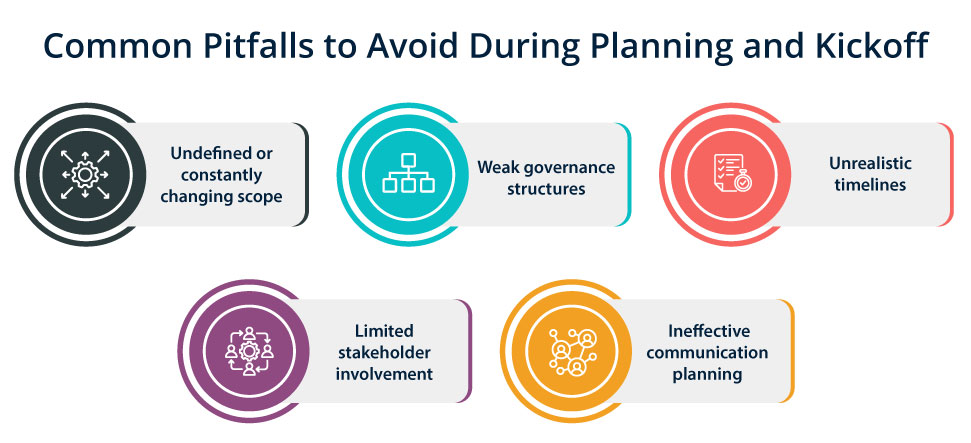
Even well-intentioned organizations can encounter challenges during this phase.
Common pitfalls include:
- Undefined or constantly changing scope
- Weak governance structures
- Unrealistic timelines
- Limited stakeholder involvement
- Ineffective communication planning
Addressing these risks early significantly improves implementation outcomes.
Turning Planning into Measurable Success
Organizations that invest in structured planning and kickoff experience tangible benefits:
- Smoother implementation with fewer disruptions
- Faster user adoption across departments
- Reduced rework and implementation costs
- Stronger alignment between technology and business strategy
For process manufacturers, this translates into improved operational efficiency, better compliance, and enhanced visibility.
Final Thoughts
ERP implementation success is not defined at go-live—it is defined long before it.
Project planning and kickoff represent the transition from strategy to execution. It is where clarity replaces assumptions, structure replaces uncertainty, and alignment replaces fragmentation.
For process manufacturers managing complex manufacturing operations, this phase is not optional—it is essential.
Because in ERP implementation, success is not accidental. It is built on structured planning, disciplined execution, and a clearly defined roadmap forward. Stay tuned for the next stage for ERP implementation in this series.