Planning in process manufacturing is fundamentally more complex than planning in discrete manufacturing and that complexity has direct consequences for how
Most process manufacturers have a procurement problem they haven't fully named yet. They order raw materials, receive them, pay suppliers,
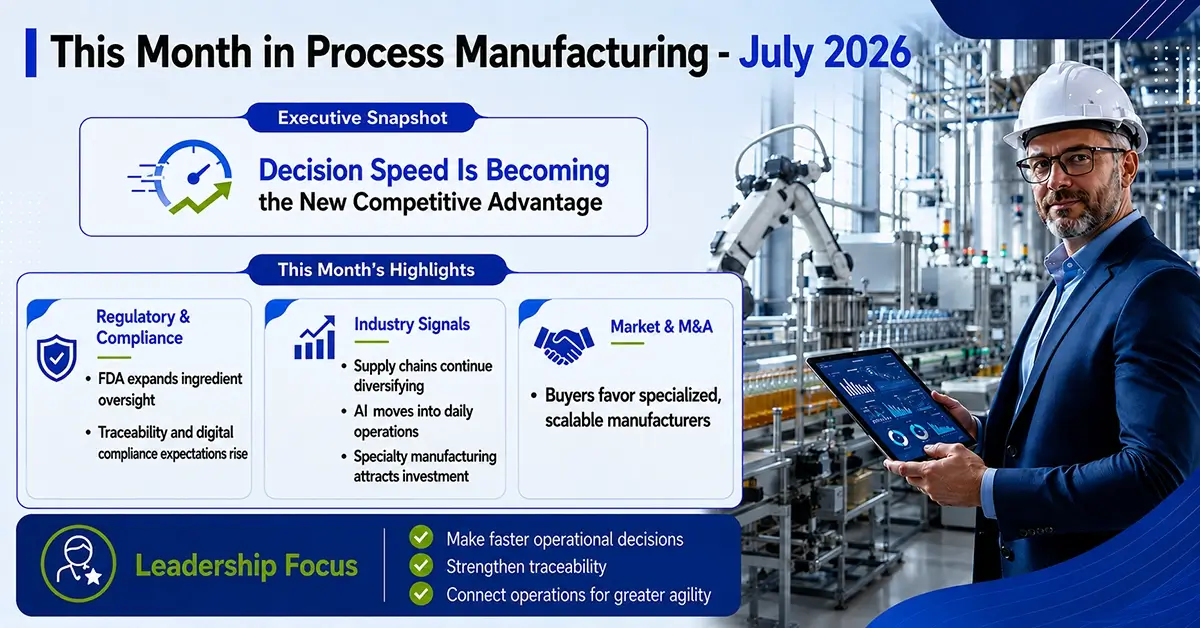
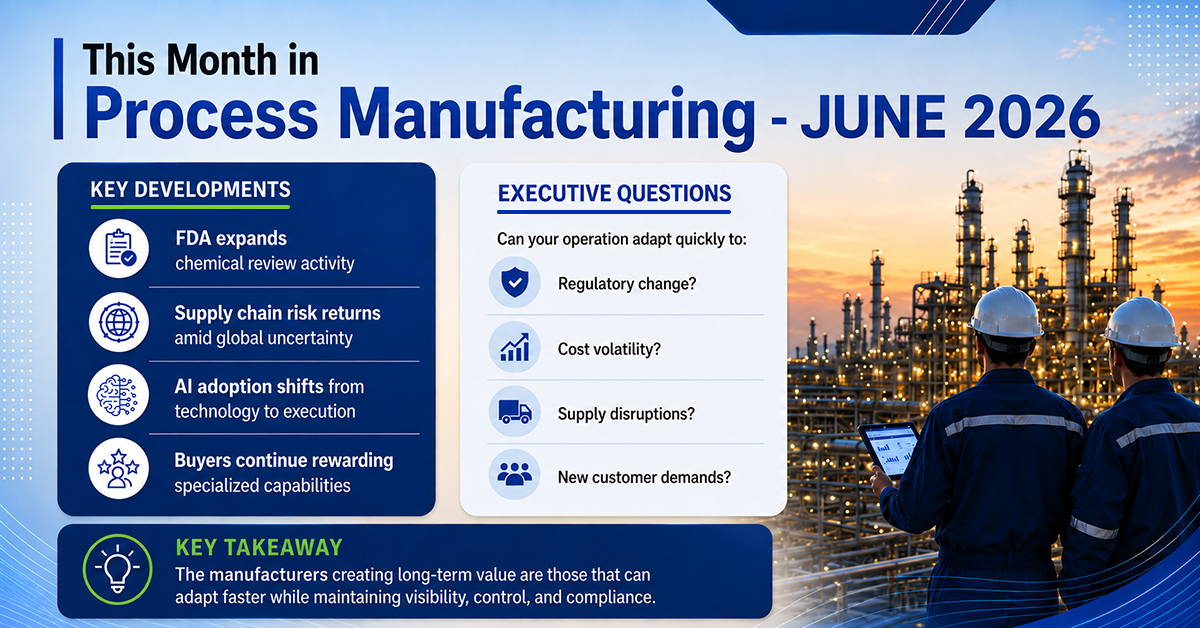
FDA ingredient review activity accelerated, energy-driven costs rose again, and AI discussions moved beyond experimentation toward operational integration.
More than 128 years after its founding, Morehouse Foods continues to supply mustard, horseradish, barbecue sauce, dipping sauces, and chimichurri
It fails much earlier—at the point where business requirements are translated into system design without sufficient clarity, validation, and governance.
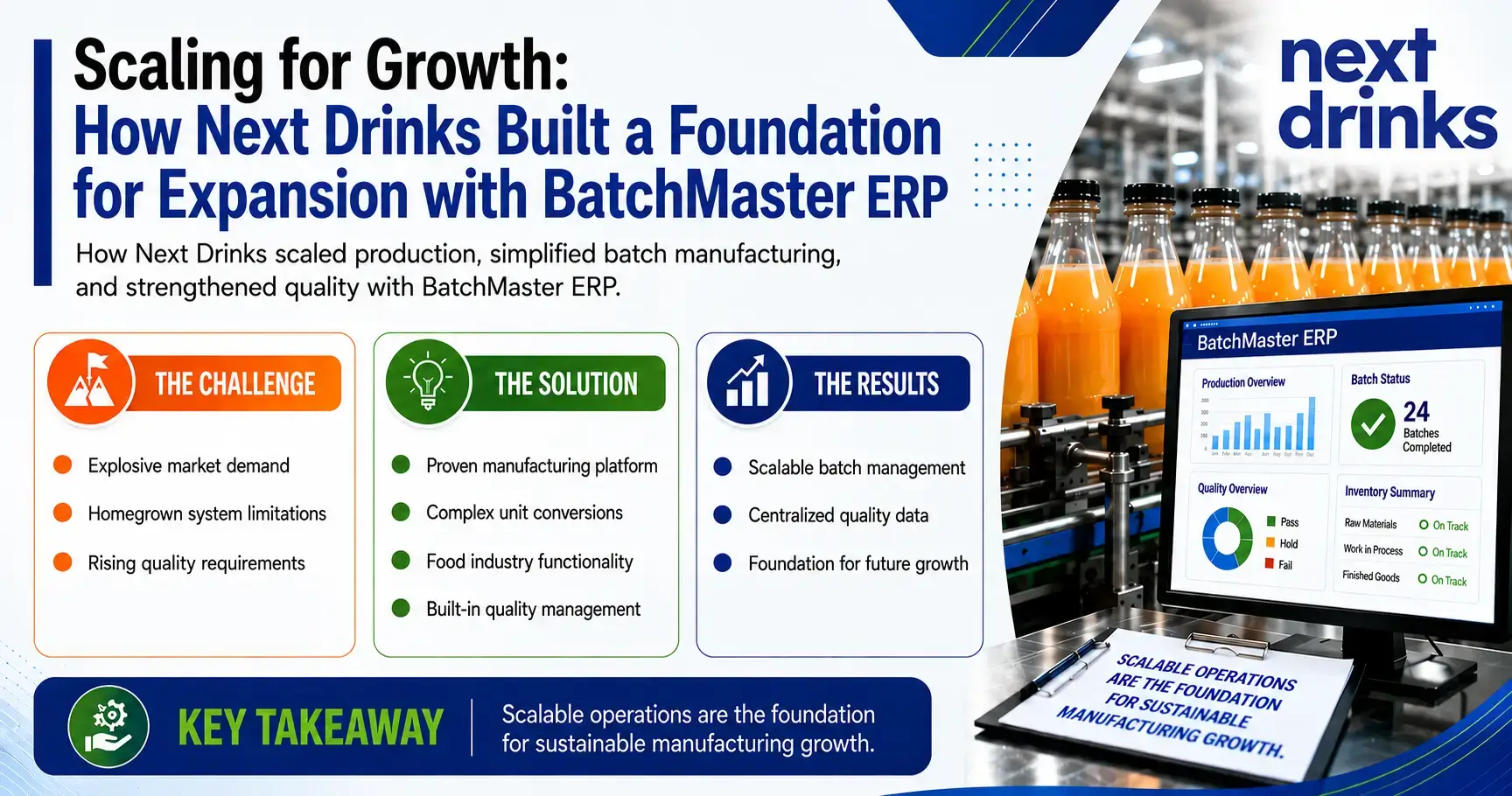
Florida Nutrition, a Miami-based contract manufacturer of nutritional powders and capsules, faced a common but critical challenge: its operational systems could
April made one shift unmistakably clear: compliance and formulation control are no longer back-office functions — they are now core drivers
Cosmetix West, a California-based contract manufacturer of personal care products, replaced its decade-old desktop ERP and accounting systems with an integrated
Process manufacturing organizations invest significant effort in selecting the right ERP system and understanding their internal operations.
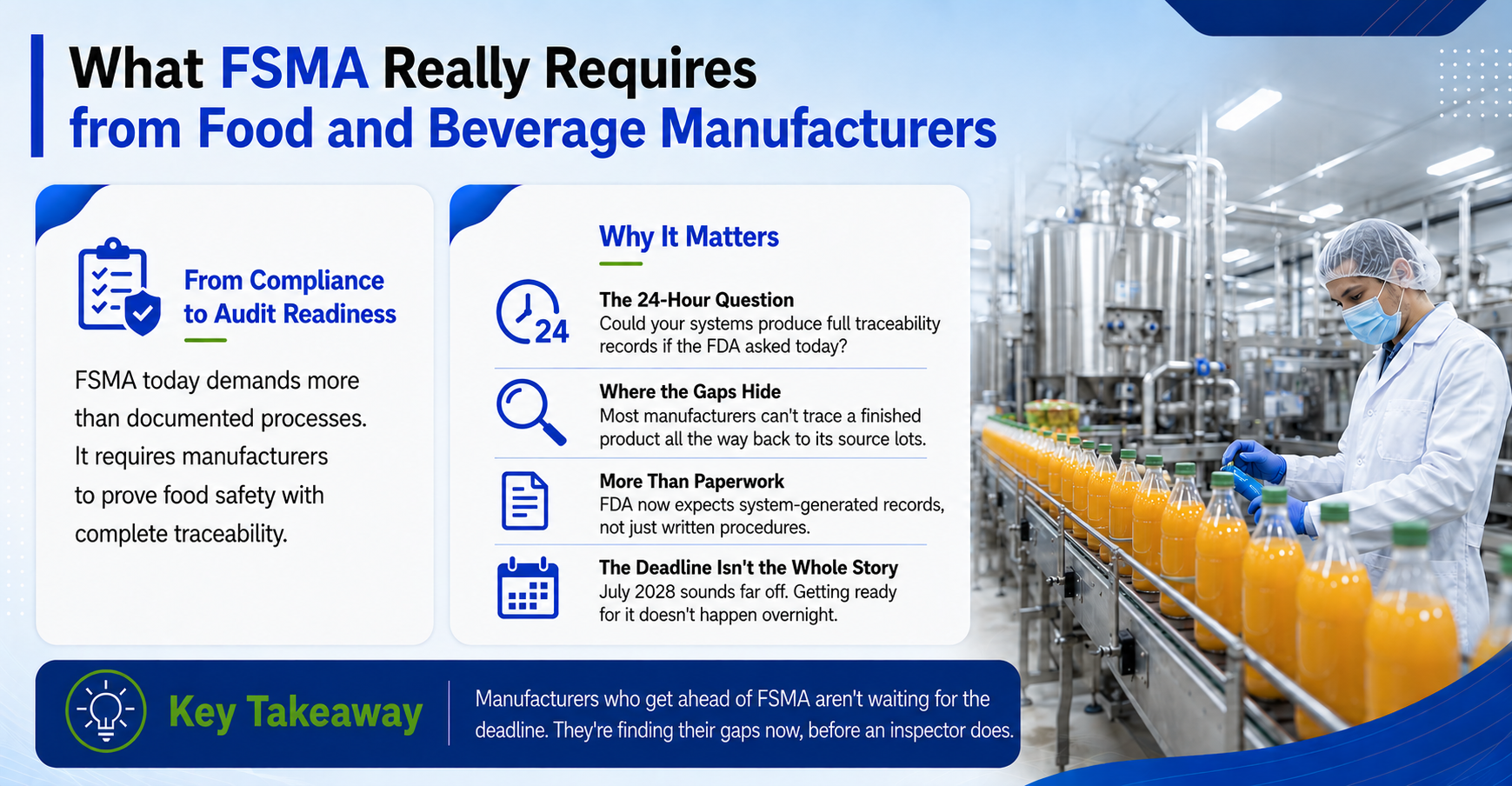
For food & beverage and other regulated manufacturers, FDA audit readiness has fundamentally changed.
March 2026 is shaping up as a pivotal month for mid-market process manufacturers ($5M–$50M revenue). Inflation continues to climb while
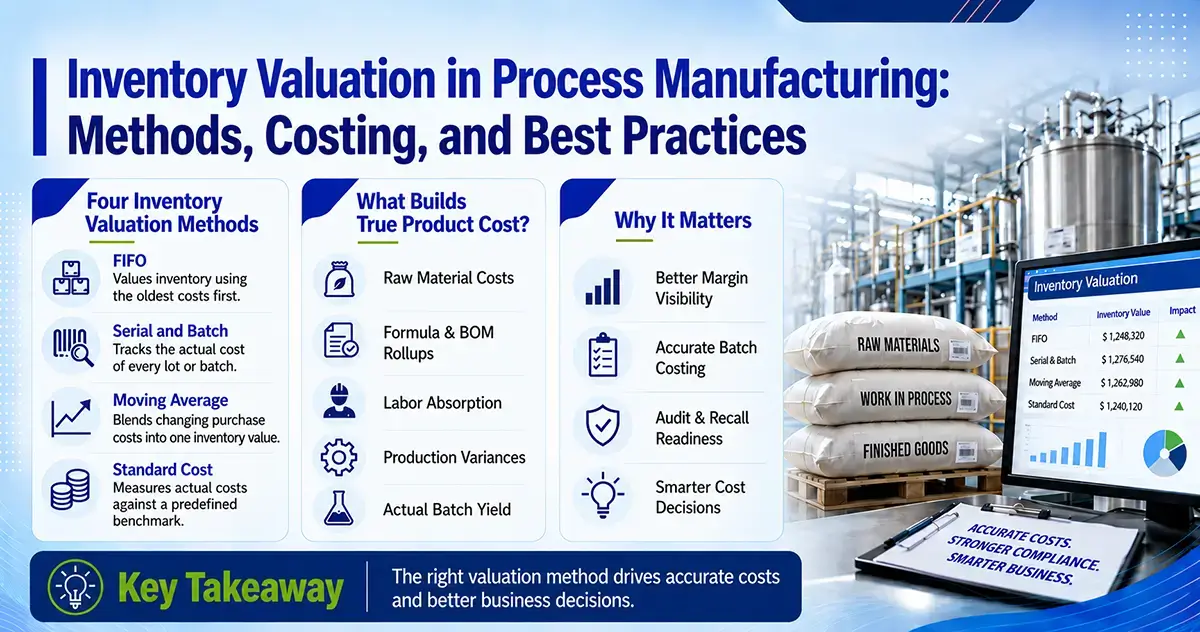
A business might report “95% accurate inventory,” but if that number reflects only SKU totals, it hides deeper complexity, especially