📚 New Blog Posts
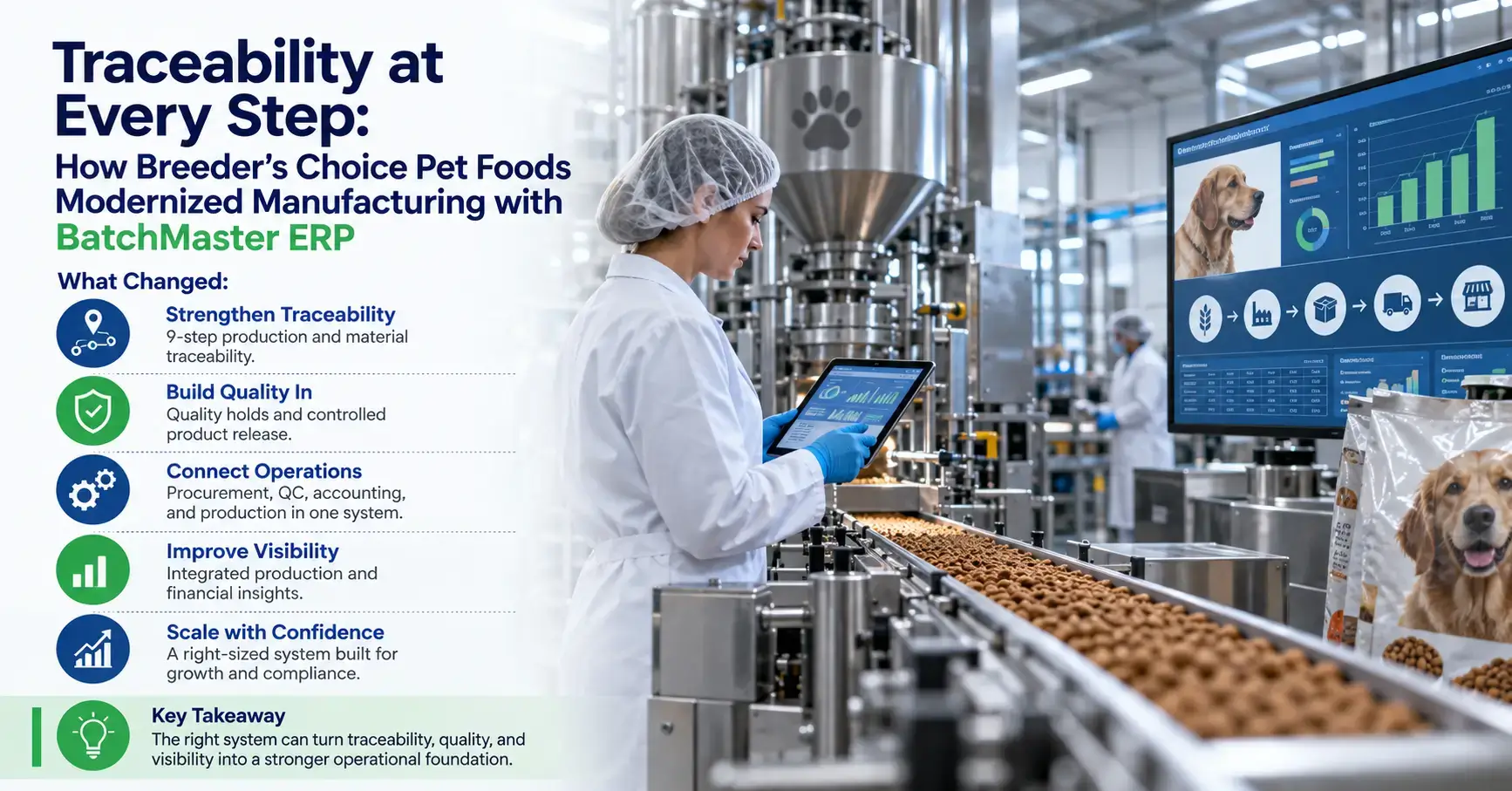
1. Scaling for Growth: How Next Drinks Built a Foundation for Expansion with BatchMaster ERP
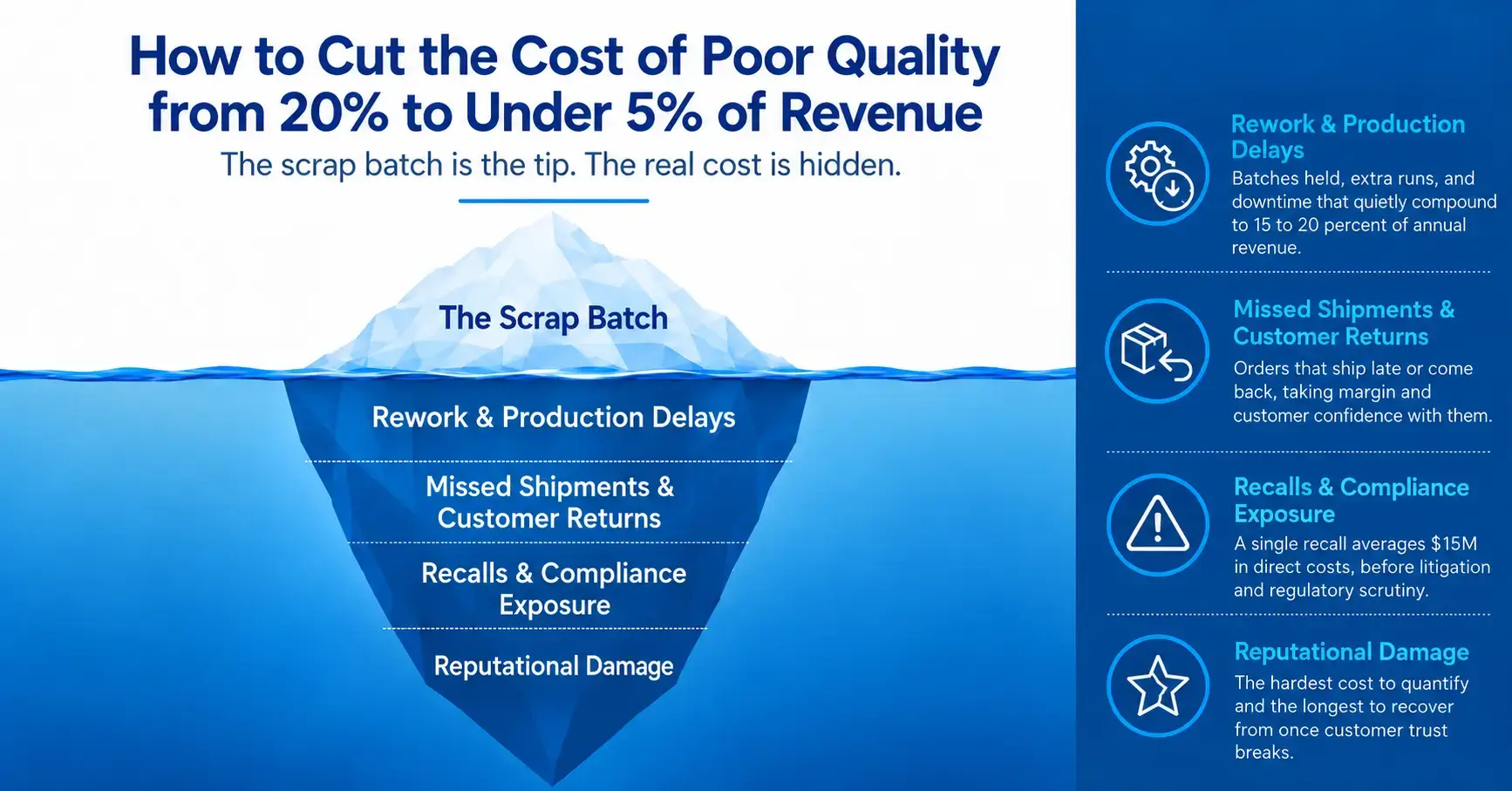
2. Inventory Valuation in Process Manufacturing: Methods, Costing, and Best Practices
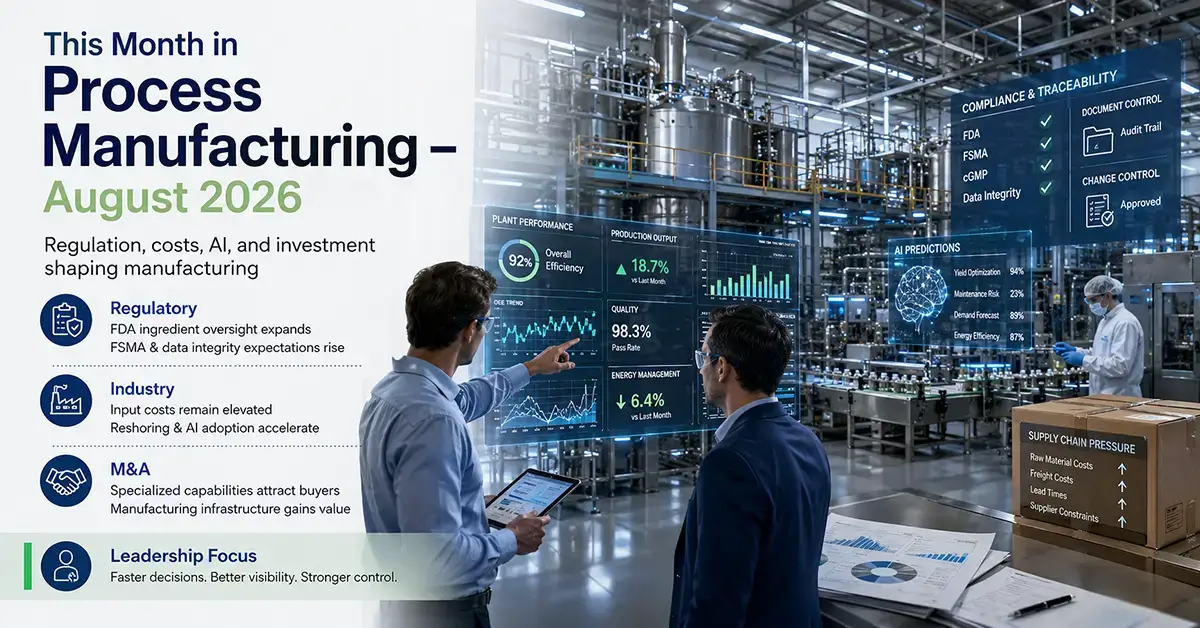
3. This Month in Process Manufacturing – July 2026
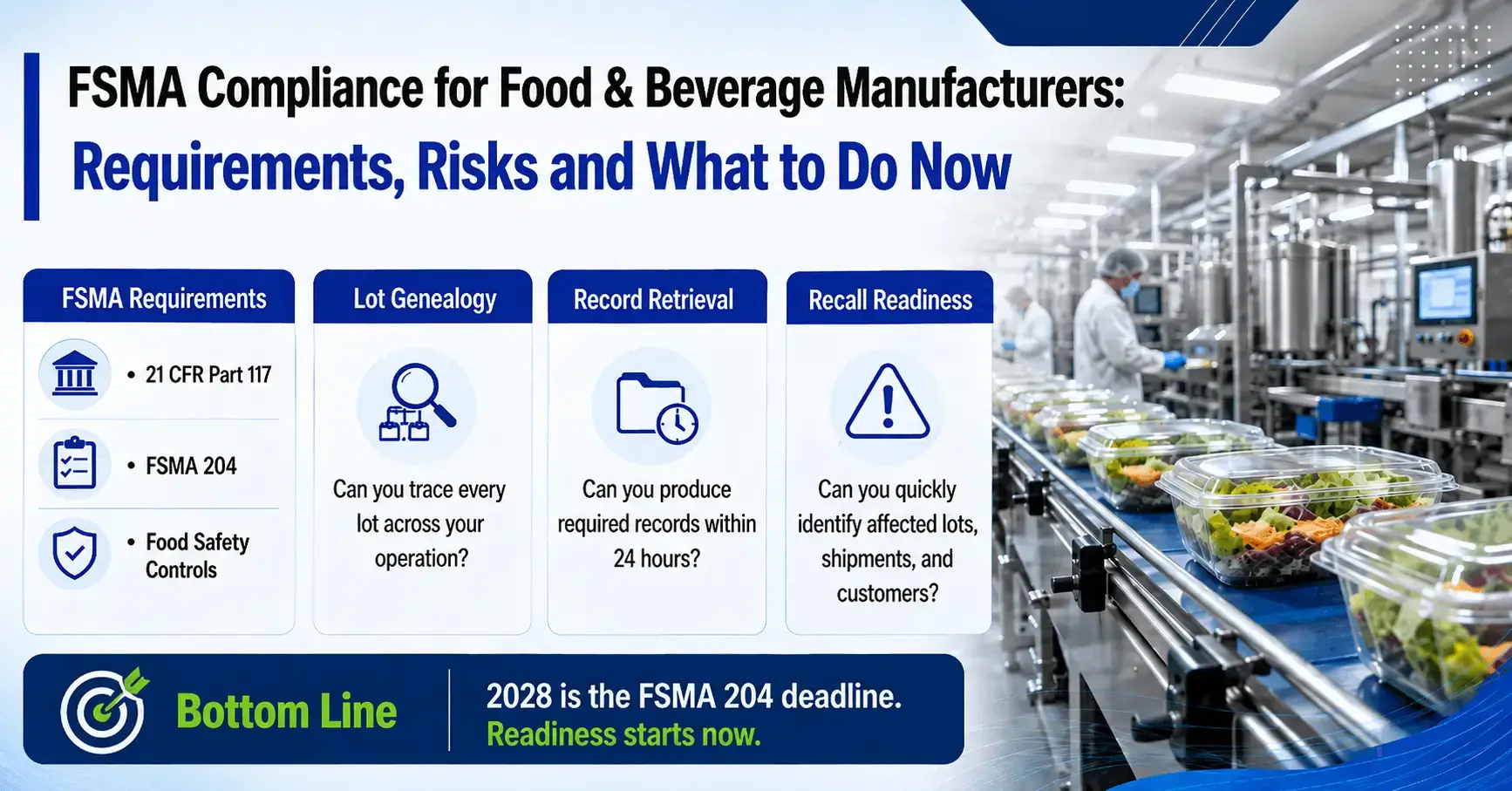
In July 2026, we hosted a webinar on what FSMA requires from food and beverage manufacturers, where compliance programs most commonly fall short, and what it takes to be truly audit-ready. The session surfaced with a pattern that appears across the industry: most operations believe they are compliant, but far fewer are confident they could prove it on demand.
That gap is the real compliance risk. The July 2028 FSMA 204 enforcement deadline is creating a false sense of time to process manufacturers. The more immediate reality is that 21 CFR Part 117, covering preventive controls, Current Good Manufacturing Practices (cGMPs), supplier verification, and recall planning, is already in effect and actively enforced today. FDA warning letters to food manufacturers have been trending upward through 2025 and into 2026. The education and adoption phase is over and what FDA expects now is sustained, demonstrable compliance.
What FSMA Requires from Food & Beverage Manufacturers
FSMA is not a single regulation as it covers two major rules that carry the greatest day-to-day compliance weight for food and beverage manufacturers.
21 CFR Part 117 requires a written food safety plan, hazard analysis, preventive controls, cGMPs, supplier verification, and a recall plan. It applies to FDA-registered food facility subject to the rule and is enforced today.
FSMA 204 introduces additional traceability requirements for foods on the FDA’s Food Traceability List. It requires capturing Key Data Elements (KDEs) at Critical Tracking Events (CTEs) and producing complete, sortable electronic records within 24 hours of an FDA request. The enforcement deadline is July 2028.
Treating FSMA 204 as the only deadline to manage is one of the most common missteps in compliance planning.
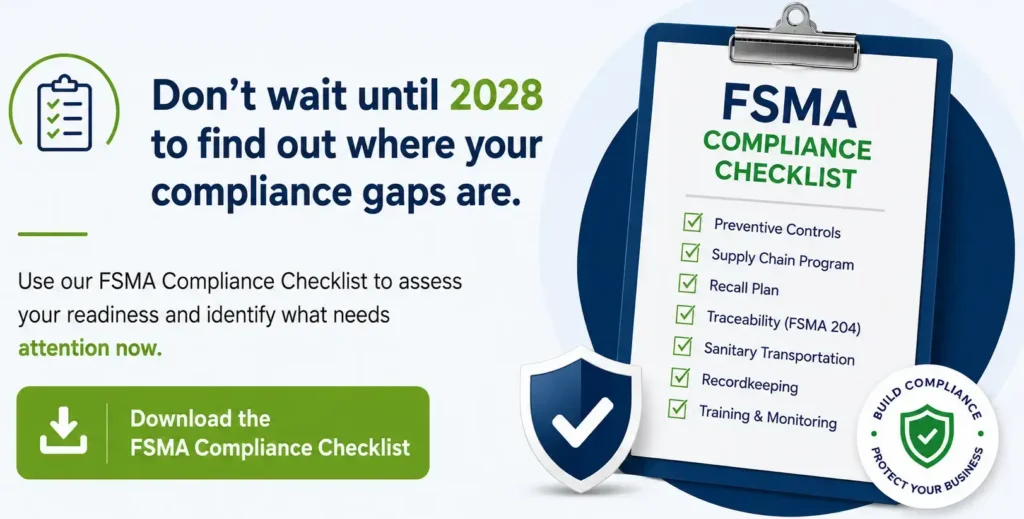
Download our FSMA Compliance infographic for a quick overview of 21 CFR Part 117 and FSMA 204, including covered foods and key traceability requirements.
FSMA 204: Critical Tracking Events (CTEs) and Key Data Elements (KDEs)
FSMA 204 raises the bar for traceability by requiring manufacturers to capture and connect specific information as covered foods move through the supply chain. Instead of reconstructing a product’s history after an issue occurs, manufacturers need traceability records that show what was received, how ingredients were transformed, and where finished products were shipped.
For covered foods, this means capturing specific KDEs at applicable CTEs, including receiving, transformation, and shipping.
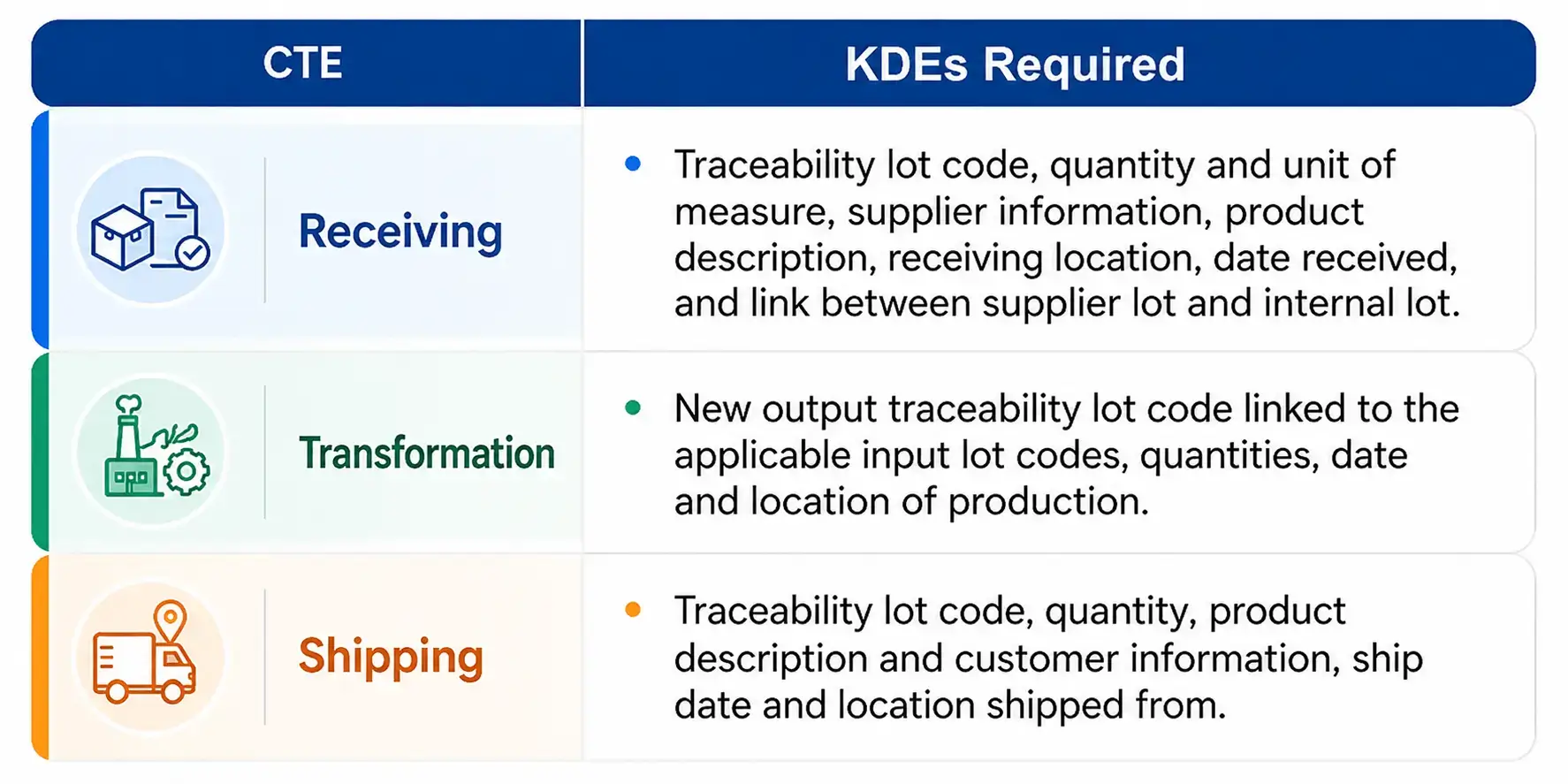
These records must stay connected across the product journey. When FDA requests traceability information, manufacturers must produce the required traceability records in a sortable electronic spreadsheet within 24 hours. For operations managing hundreds of ingredients lots and thousands of shipments, meeting that requirement through manual processes can become increasingly difficult and time-consuming.
Vinay Singh, Chief Product Officer at BatchMaster, explains CTEs, KDEs, and the 24-hour electronic record requirement
Where FSMA Compliance Starts Breaking Down
Most manufacturers are not noncompliant by intention. The gaps develop quietly between what a written procedure says and what the system actually captures. These gaps often surface in five key areas.
- Incomplete lot genealogy: The links between finished goods and raw ingredient lots may exist across multiple records or systems rather than as a single, connected lot history. Reconstructing them under deadline pressure can takes hours or days.
- Manual recordkeeping: The problem is not simply whether the records exist, but whether they can be retrieved and provided in the required format. FSMA 204 requires certain traceability information to be provided to FDA in a sortable electronic spreadsheet upon request. Reliance on paper logs, manual processes, and disconnected spreadsheets can make meeting the 24-hour response requirement significantly more difficult.
- Disconnected systems: Ingredients in one system, production in another, quality in a third. Assembling a complete traceability picture across disconnected data during an investigation is where valuable time can be lost.
- Recall readiness: Ask any team how long a mock recall would take today. If identifying every affected lot, shipment, and customer requires pulling information from multiple systems or spreadsheets, the organization may may not be as recall-ready as it appears.
- Audit evidence that depends on people, not systems: If SOPs describe one process but no system records confirm it happened consistently, the organization may struggle to demonstrate that its procedures are being followed consistently.
The difference between having records and being able to prove compliance is the difference between believing you are ready and knowing you are.
The Business Cost of FSMA Non-Compliance
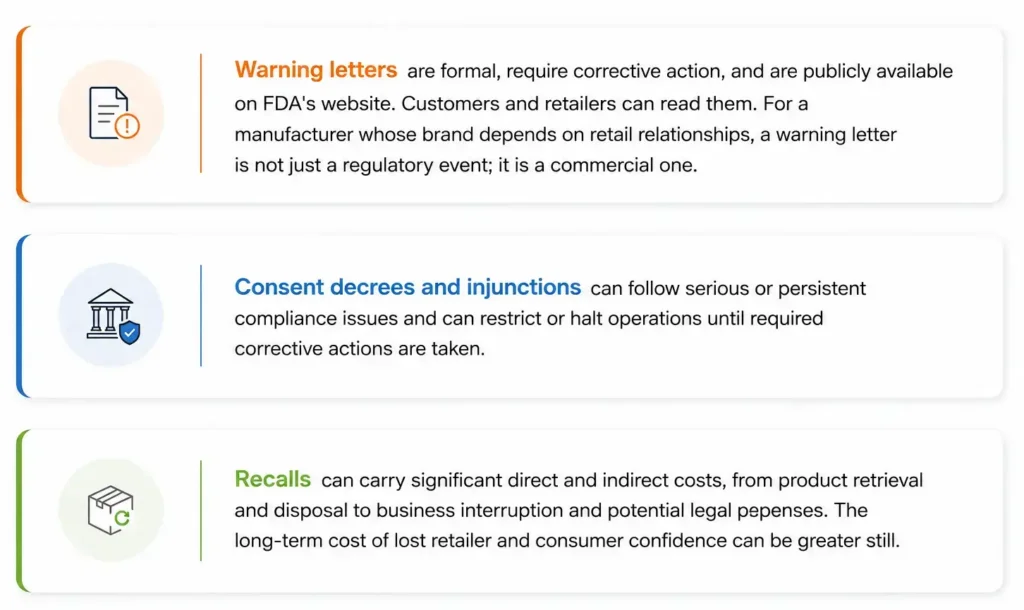
FSMA non-compliance does not stop at the regulatory level. When traceability, recordkeeping, or food safety controls fail, the consequences can extend into production, customer relationships, brand reputation, and ultimately revenue. What begins as a compliance gap can quickly become a much broader business problem.
The traceability challenge is not theoretical. In 2026, FDA conducted Traceability Readiness Tabletop Exercises with industry participants to simulate a Food Traceability Rule records request. Participants were asked to locate traceability records for specific products and provide the required information in an electronic sortable spreadsheet within 24 hours.
The exercises showed meaningful progress, but they also identified gaps in areas such as data completeness, information sharing, and supply chain coordination. The takeaway for manufacturers is clear: traceability data must not only exist. It needs to be accurate, connected across the supply chain, and accessible when needed.
Why FSMA Is Not Just the Quality Team’s Responsibility
FSMA touches multiple functions in a food manufacturing operation. The information needed to demonstrate compliance is created across purchasing, receiving, production, quality, inventory, and shipping. A gap at any one of these points can make it harder to maintain a complete and reliable compliance record.
Role
Click a role to see its FSMA responsibilities.
Quality Manager
Oversees food safety and quality controls, inspections, corrective actions, and the records needed to demonstrate that required controls are being followed.
Production Manager
Ensures required production and traceability information is captured during transformation, including applicable input traceability lot codes, the new traceability lot code, quantities, date, and location.
Warehouse/Inventory Manager
Maintains traceability as covered foods move through receiving and shipping, ensuring required lot and movement information remains connected and retrievable.
Product Development Manager
Helps ensure formulation and product changes are controlled and that food safety considerations, including applicable allergen controls, remain aligned with the finished product.
CFO
Understands the financial and business exposure associated with recalls, regulatory action, operational disruption, and weaknesses in compliance readiness.
Procurement Manager
Supports supplier approval and verification requirements by maintaining supplier documentation and ensuring required controls and records are available for applicable raw materials and ingredients.
Vinay Singh, Chief Product Officer at BatchMaster, explains key FSMA-related responsibilities across roles in the manufacturing organization.
Why Waiting Until 2028 Creates More Risk
The July 2028 enforcement deadline gives manufacturers additional preparation time, but it does not reduce the work required to become ready. Treating the deadline as the start line rather than the finish line can create unnecessary risk. Getting FSMA 204-ready is not a single task. It is a sequence of interconnected activities, each of which takes time: assessing FTL applicability, mapping CTEs and KDEs, addressing lot genealogy gaps, connecting disconnected systems, establishing compliant workflows, training teams across production, warehouse, quality, and procurement, validating that processes work as intended, testing 24-hour record retrieval, and conducting mock recalls.
The longer manufacturers wait, the more of this work must be compressed into a shorter window. That can mean greater operational pressure on teams already managing day-to-day production, less time to identify and correct gaps uncovered during testing, and fewer opportunities to refine processes before they need to perform under an actual FDA records request.
The manufacturers in the strongest position in 2028 will be the ones building compliance into their operations now, not racing to complete it later.
How BatchMaster Helps Food & Beverage Manufacturers Get FSMA-Ready
BatchMaster ERP is purpose-built for process manufacturers. Traceability, lot management, quality control, and compliance recordkeeping are built into how the system works. By capturing traceability and compliance data as part of day-to-day transactions, BatchMaster helps manufacturers maintain the records they need without having to reconstruct them across disconnected systems when a request arrives.
- Bidirectional lot traceability: Trace forward from a supplier lot to affected batch, finished good, and customer or trace backward from a finished good to ingredient lots used to produce it. This connected lot genealogy helps teams quickly identify where materials came from and where finished products went.
- Automatic KDE capture at applicable CTE: Receiving, production, and shipping activities capture relevant traceability information as transactions occur. That helps maintain a connected traceability record from receiving through production and shipping.
- Recall simulation: Run a mock recall to identify affected lots, shipments, and customers and test how quickly your team can retrieve the necessary information. The same connected records support faster response when traceability information is requested.
- Electronic audit trails: System-generated timestamps, electronic signatures, and role-based access help maintain a documented history of activities and changes for audit and compliance purposes.
- Daily safeguards: Shelf-life management helps prevent the use of expired materials in production. Quality controls and compliance workflows help manage material disposition, while allergen tracking and related quality records support food safety requirements throughout operations.
- 24-hour record retrieval: Generate connected, sortable traceability records from the system to support FDA’s 24-hour records request requirement. Instead of reconstructing information across paper records and disconnected spreadsheets, teams can retrieve traceability information from a single operational system.
Vinay Singh, Chief Product Officer at BatchMaster, walks through BatchMaster’s FSMA compliance capabilities.
Don’t Wait for an FDA Request to Test Your Readiness
FSMA compliance readiness is ultimately about being able to demonstrate that your processes work when it matters and produce the records needed to support them.
Use the time available now to identify gaps, build traceability into daily operations, test 24-hour record retrieval, and run mock recalls before your systems and processes are tested under real-world pressure.
How FSMA-Ready Is Your Operation?
Talk to our team about your current traceability and compliance setup to identify the gaps that need attention before 2028.