Selecting ERP software is, one of the most critical decisions businesses can make, and it demands careful planning and effort. Once selected, the next step is implementation—an involved process that requires structure and foresight. Considering the importance of ERP software, understanding its lifecycle is essential.
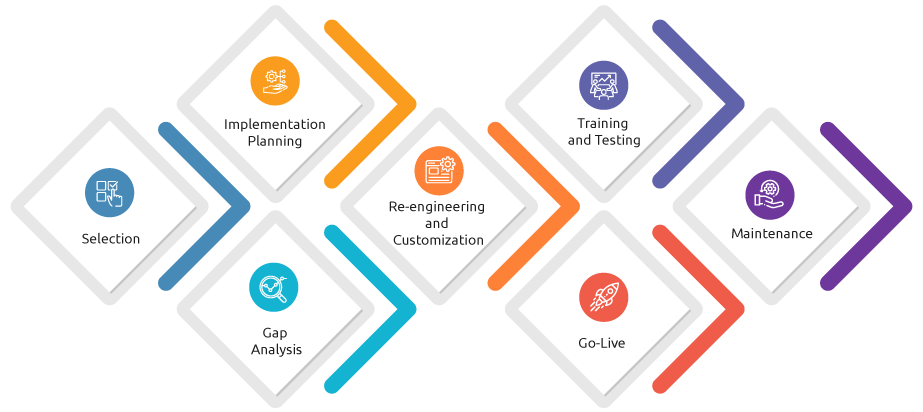
The lifecycle of ERP software encompasses various stages, including planning, selection, implementation, retirement, and replacement. Let’s explore each stage in detail:
Every business has its own set of challenges to overcome. Choosing the right ERP software is crucial to ensure it meets specific business requirements. Evaluate multiple options before choosing the system that best aligns with your operational needs.
It is essential to have a detailed plan to navigate the complex implementation process and stay on track. Planning helps you examine the project on a more granular level and ensure that resources are well utilized. It helps to mitigate last-minute surprises and chaos.
Gap analysis is the process of evaluating the specific needs of your business, ensuring that when you choose ERP software, it aligns with these needs. This process involves analyzing the current business problems and determining solutions to help the business grow.
Three steps to perform gap analysis include:
This step focuses on restructuring and redesigning business processes to drive operational improvements. Organizations should prioritize creating streamlined and efficient workflows, as well as optimizing key business functions.
Once processes are re-engineered, the ERP system is customized accordingly, and data migration starts. It’s essential for the project team to carefully evaluate which data should be migrated, ensuring that only relevant, valuable information is transferred while eliminating outdated or unnecessary data.
Employees designated as subject matter experts receive training during the ERP implementation process, enabling them to serve as the primary point of contact for users. After the system goes live, users should be trained on how to operate the system and perform tasks on the new system.
Conduct comprehensive testing and validation to assess user acceptance and ensure the system meets operational requirements.
It’s crucial to involve your IT team in this process to:
This is the step where the ERP system becomes operational. At this point, all validated data is entered into the system, and daily operations begin on the new platform.
At this stage, some employees may still be confused despite training, so organizations should be prepared to manage this transition smoothly. Ensure the entire core team is present and prepared to answer questions, resolve issues, and support users through the change.
This stage focuses on ensuring the ERP system remains reliable, secure, efficient, and aligned with evolving business needs. Once the system is implemented is required. User feedback should be regularly reviewed and addressed to ensure the system operates smoothly and continues to meet evolving business needs.
ERP systems have a lifecycle that begins with selection and planning, followed by implementation, customization, training, and testing. Once live, the system moves into the maintenance phase, where it’s continuously monitored, updated, and optimized.
Understanding and managing each phase of the ERP lifecycle helps ensure smoother implementation, better adoption, and improved long-term value.
Understanding the lifecycle of an ERP system is essential for any organization planning to implement or upgrade its enterprise software. From careful selection and strategic planning to thorough training, testing, and ongoing maintenance, each stage plays a pivotal role in ensuring a successful ERP journey.
By following a structured, thoughtful approach, businesses can minimize disruptions, maximize return on investment (ROI), and ensure their ERP system evolves in line with their operational needs. Investing time and resources into every phase of ERP lifecycle management not only enhances system performance but also positions organizations for long-term growth and competitive advantage.
Contact us to schedule a demo and see our industry-specific features in action.